
This site is intended for U.S. Healthcare Professionals only
Ryzneuta® is a leukocyte growth factor indicated to decrease the incidence of infection, as manifested by febrile neutropenia, in adult patients with non-myeloid malignancies receiving myelosuppressive anti-cancer drugs associated with a clinically significant incidence of febrile neutropenia.
Limitations of Use
Ryzneuta® is not indicated for the mobilization of peripheral blood progenitor cells for hematopoietic stem cell transplantation.
Patients undergoing myelosuppressive chemotherapy have a risk of developing chemotherapy-induced neutropenia (CIN), and subsequently, febrile neutropenia (FN)1
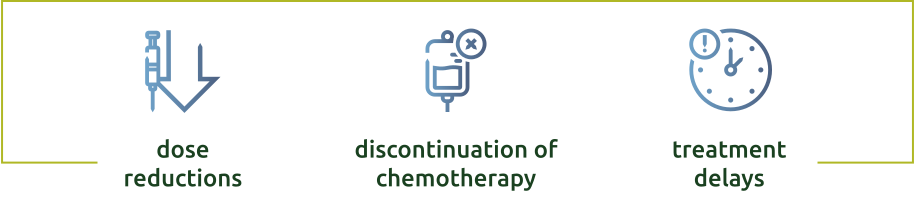
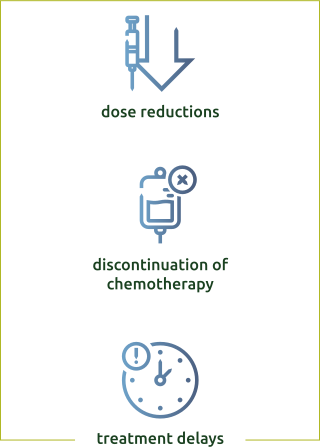
FN can be life-threatening and often leads to1
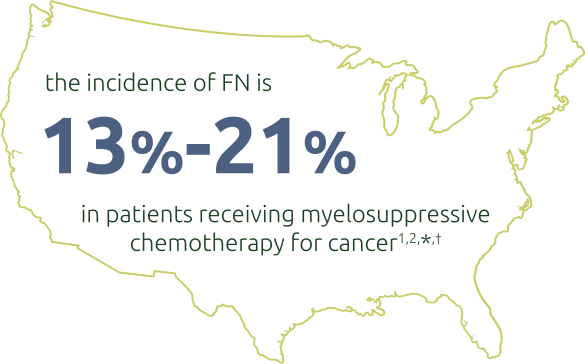
Based on retrospective cohort studies in the United States,
Ryzneuta® is contraindicated in patients with a history of serious allergic reactions to granulocyte stimulating factors such as efbemalenograstim alfa-vuxw, pegfilgrastim, or filgrastim products.
Ryzneuta® is contraindicated in patients with a history of serious allergic reactions to granulocyte stimulating factors such as efbemalenograstim alfa-vuxw, pegfilgrastim, or filgrastim products.
Ryzneuta® is a leukocyte growth factor indicated to decrease the incidence of infection, as manifested by febrile neutropenia, in adult patients with non-myeloid malignancies receiving myelosuppressive anti-cancer drugs associated with a clinically significant incidence of febrile neutropenia.
Limitations of Use
Ryzneuta® is not indicated for the mobilization of peripheral blood progenitor cells for hematopoietic stem cell transplantation.
Ryzneuta® is contraindicated in patients with a history of serious allergic reactions to granulocyte stimulating factors such as efbemalenograstim alfa-vuxw, pegfilgrastim, or filgrastim products.
Splenic Rupture
Splenic rupture, including fatal cases, can occur following the administration of recombinant human granulocyte colony stimulating factor (rhG-CSF) products. Evaluate patients who report left upper abdominal or shoulder pain for an enlarged spleen or splenic rupture.
Acute Respiratory Distress Syndrome (ARDS)
ARDS can occur in patients receiving rhG-CSF products. Evaluate patients who develop fever and lung infiltrates or respiratory distress. Discontinue Ryzneuta® in patients with ARDS.
Serious Allergic Reactions
Serious allergic reactions, including anaphylaxis, can occur in patients receiving rhG-CSF products. Permanently discontinue Ryzneuta® in patients with serious allergic reactions. Ryzneuta® is contraindicated in patients with a history of serious allergic reactions to Ryzneuta® or other rhG-CSF products such as pegfilgrastim, eflapegrastim or filgrastim products.
Sickle Cell Crisis in Patients with Sickle Cell Disorders
Severe and sometimes fatal sickle cell crises can occur in patients with sickle cell disorders receiving rhG-CSF products. Discontinue Ryzneuta® if sickle cell crisis occurs.
Glomerulonephritis
Glomerulonephritis has occurred in patients receiving rhG-CSF products. The diagnoses were based upon azotemia, hematuria (microscopic and macroscopic), proteinuria, and renal biopsy. Generally, events of glomerulonephritis resolved after dose-reduction or discontinuation. Evaluate and consider dose-reduction or interruption of Ryzneuta® if causality is likely.
Leukocytosis
White blood cell (WBC) counts of 100 × 109/L or greater have been observed in patients receiving rhG-CSF products. Monitor complete blood count (CBC) during Ryzneuta® therapy. Discontinue Ryzneuta® treatment if WBC count of 100 × 109/L or greater occurs.
Thrombocytopenia
Thrombocytopenia has been reported in patients receiving rhG-CSF products. Thrombocytopenia occurred in 11% of Ryzneuta®-treated patients. One patient (0.4%) experienced severe thrombocytopenia. Monitor platelet counts.
Capillary Leak Syndrome
Capillary leak syndrome has been reported after administration of rhG-CSF products and is characterized by hypotension, hypoalbuminemia, edema and hemoconcentration. Episodes vary in frequency and severity, and may be life-threatening if treatment is delayed. If symptoms develop, closely monitor, and give standard symptomatic treatment, which may include a need for intensive care.
Potential for Tumor Growth Stimulatory Effects on Malignant Cells
The granulocyte colony-stimulating factor (G-CSF) receptor through which Ryzneuta® acts has been found on tumor cell lines. The possibility that Ryzneuta® acts as a growth factor for any tumor type, including myeloid malignancies and myelodysplasia, diseases for which Ryzneuta® is not approved, cannot be excluded.
Myelodysplastic Syndrome (MDS) and Acute Myeloid Leukemia (AML) in Patients with Breast and Lung Cancer
MDS and AML have been associated with the use of rhG-CSF products in conjunction with chemotherapy and/or radiotherapy in patients with breast and lung cancer. Monitor patients for signs and symptoms of MDS/AML in these settings.
Aortitis
Aortitis has been reported in patients receiving rhG-CSF products. It may occur as early as the first week after start of therapy. Consider aortitis in patients who develop generalized signs and symptoms such as fever, abdominal pain, malaise, back pain, and increased inflammatory markers (e.g., c-reactive protein and white blood cell count) without known etiology. Discontinue Ryzneuta® if aortitis is suspected.
Nuclear Imaging
Increased hematopoietic activity of the bone marrow in response to growth factor therapy has been associated with transient positive bone imaging changes. This should be considered when interpreting bone imaging results.
In study GC-627-04, the most common adverse reactions (≥10%) through cycle 1 were nausea (51%), anemia (15%), and thrombocytopenia (12%). Other adverse reactions reported by ≥ 20% of Ryzneuta®-treated patients with breast cancer receiving myelosuppressive chemotherapy in study GC-627-05 were fatigue and bone pain.
Please see accompanying Ryzneuta® full Prescribing Information.